Antiquity
10.15184/aqy.2025.10237
Data/statistical analysis
Not applicable
Indigenous accounting and exchange at Monte Sierpe (‘Band of Holes’) in the Pisco Valley, Peru
10-Nov-2025
The authors declare no conflicts of interest. This research was funded by a Franklin Research Grant, the University of South Florida office of the Dean and the Cotsen Institute of Archaeology at the University of California, Los Angeles. The authors thank the Peruvian Ministry of Culture for granting us a permit (000318-2024-DCIA-DGPA-VMPCIC/MC) that allowed us to carry out this study. Open access funding provided by the University of Sydney.
Additional Media
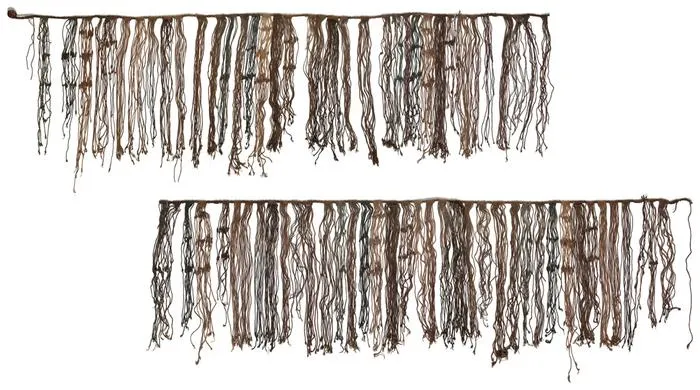
Figure 9. Khipu found near Pisco now held in the Ethnologisches Museum, Berlin: top) VA 16135a; bottom) VA 16135b (© Ethnologisches Museum, Staatliche Museen zu Berlin, photographs by Claudia Obrocki; made available via CC BY-NC-SA 4.0 license). Credit: © Ethnologisches Museum, Staatliche Museen zu Berlin, photographs by Claudia Obrocki; made available via CC BY-NC-SA 4.0 license
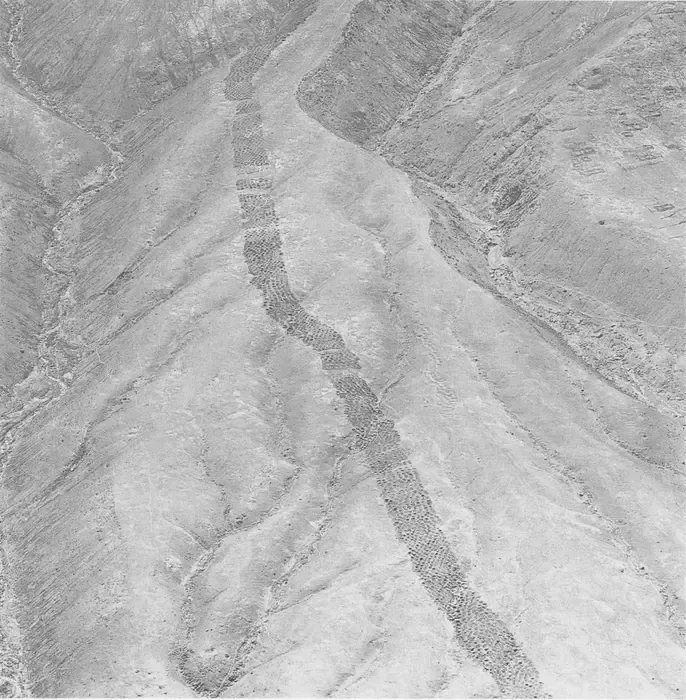
Figure 1. An aerial photograph of Monte Sierpe taken by Robert Shippee and published by the National Geographic Society in 1933 (photo reproduced courtesy of the American Natural History Museum; AMNH Library negative no. 334709). Credit: Robert Shippee/photo reproduced courtesy of the American Natural History Museum; AMNH Library negative no. 334709
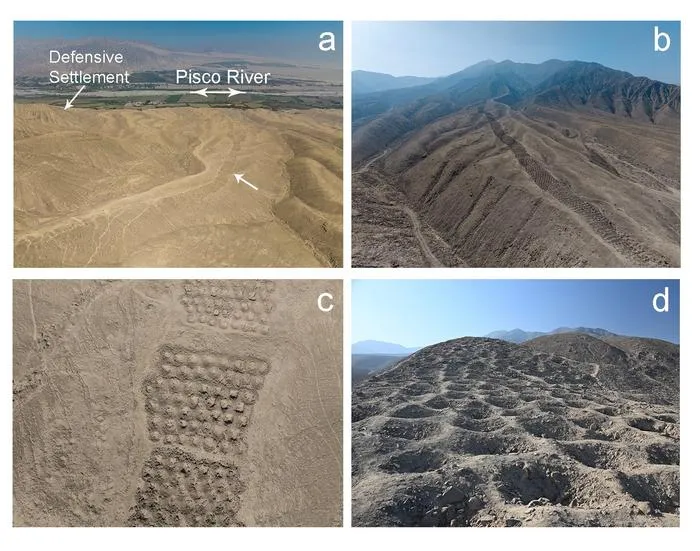
Figure 3. Monte Sierpe: a–c) aerial photographs of the Band of Holes and its surrounding environment; d) ground-level photograph of the holes (photos a-c by J.L. Bongers; photo d by C. Stanish). Credit: Photos a-c by J.L. Bongers; photo d by C. Stanish).
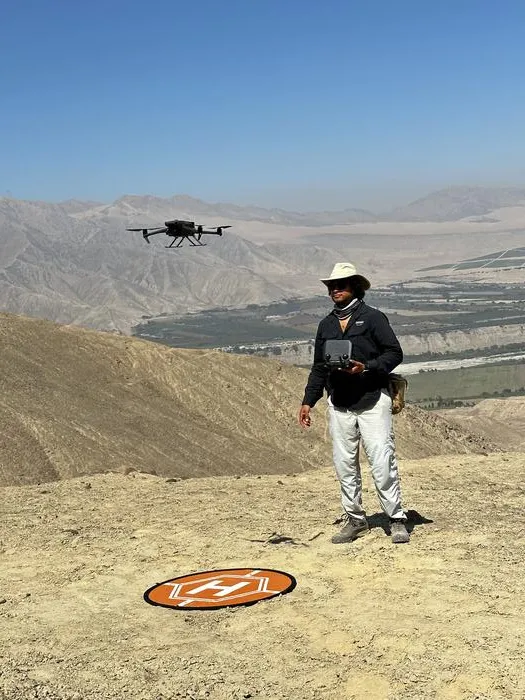
Dr Jacob Bongers landing a drone in Peru. Credit: Jorge Rodriguez/Supplied University of Sydney
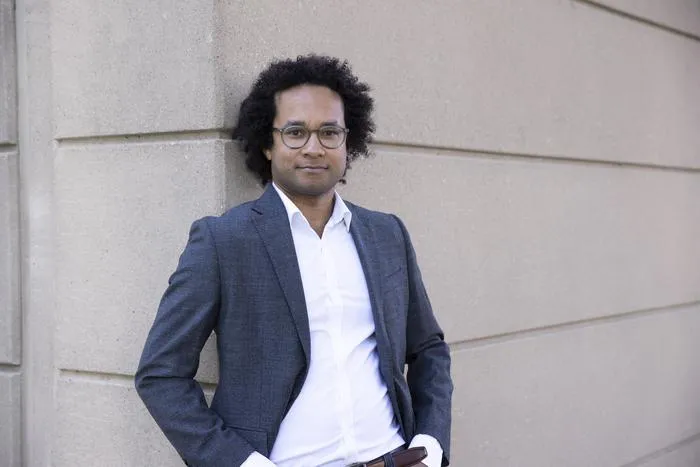
Dr Jacob Bongers, digital archaeologist, University of Sydney Credit: Stefanie Zingsheim/University of Sydney
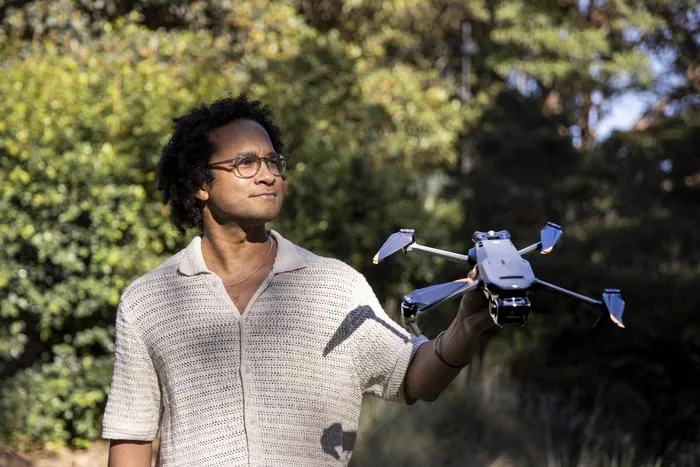
Dr Jacob Bongers at the University of Sydney, holding a drone. Credit: Stefanie Zingsheim/University of Sydney. Credit: Stefanie Zingsheim/University of Sydney.